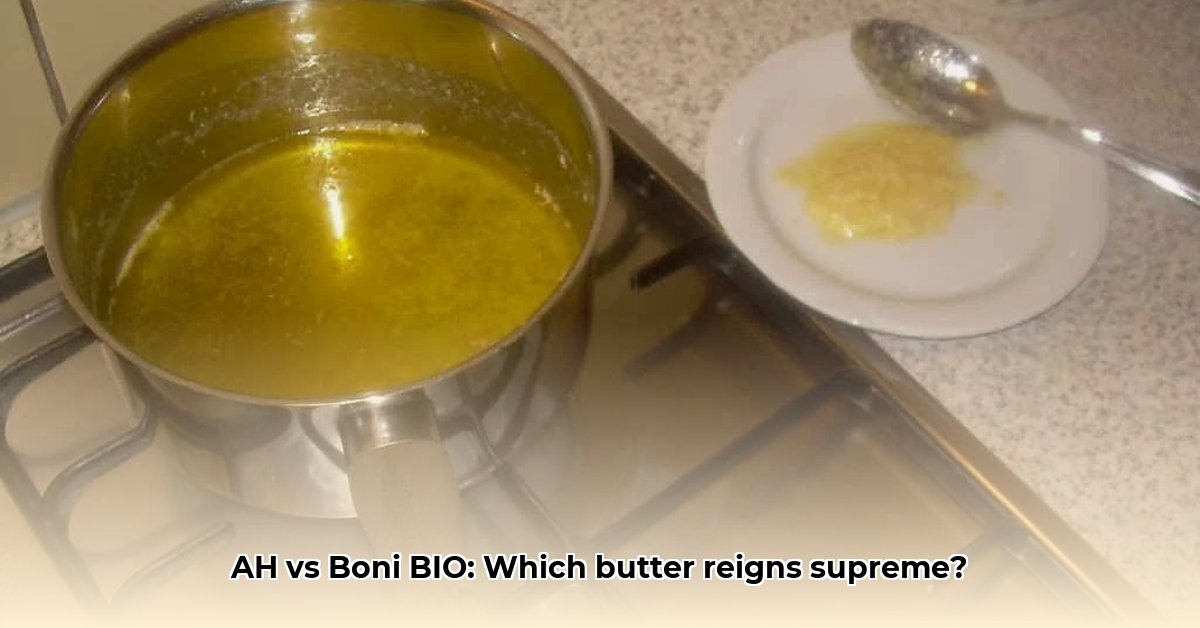
Geklaarde Boter: 'n Vergelyking van AH en Boni BIO
Choosing the right clarified butter (geklaarde boter) can be tricky. Two popular brands in South Africa, AH and Boni BIO, offer distinct options, each with its own strengths and weaknesses. This review aims to provide a clear comparison, helping you make an informed decision based on your cooking needs and preferences. We'll examine nutritional information (where available), implied production methods based on flavour profiles and marketing claims, and the likely target market for each brand.
Produk Oorsig: AH vs Boni BIO
AH's clarified butter is marketed towards high-heat cooking, highlighting its suitability for searing and frying. The packaging emphasizes its ability to withstand high temperatures without burning or smoking. Boni BIO, on the other hand, positions itself as a premium, organic and halal certified option, emphasizing a distinctive nutty flavour profile. This difference in marketing immediately suggests a divergence in target markets and possibly production methods.
Voedingswaarde Vergelyking: Wat die Etikette Sê (en Nie Sê Nie)
A direct nutritional comparison is hampered by incomplete data. While both products are predominantly fat (over 99%), precise figures for energy content (kJ) and saturated fat vary. AH lists approximately 100g fat per 100g, while Boni BIO states approximately 99.4g. Further details, such as specific saturated fat content, are missing from the Boni BIO information. This highlights a need for greater transparency in product labeling.
| Kenmerk | AH | Boni BIO |
|---|---|---|
| Vetinhoud (gram per 100g) | Ongeveer 100 | Ongeveer 99.4 |
| Energie (kJ per 100g) | Ongeveer 3700 | Inligting nie beskikbaar nie |
| Versadigde Vet (gram per 100g) | Ongeveer 70 | Inligting nie beskikbaar nie |
| Ander Kenmerke | Hoë hittetoleransie, geskik vir braai | Organies, Halal gesertifiseer, neut-geur |
Smaak en Tekstuur: 'n Sensoriese Oorsig
The contrasting flavour profiles suggest different production techniques. AH's high heat tolerance implies a robust clarification process, potentially involving higher temperatures, to create a more stable fat with a high smoke point. Boni BIO's nutty flavour profile, however, hints at a gentler, longer process, allowing for Maillard reactions and the development of these flavour notes.
Produksie Proses Spekulasie: Die Raaiwerk Begin
Without complete manufacturing details, we can only speculate on the production processes. AH's high heat tolerance suggests that they prioritise a process that prioritizes stability, likely using a faster clarification method at high temperatures. Boni BIO's nutty flavour suggests a slower, possibly more traditional, approach that preserves more nuanced flavour compounds. Greater transparency from the manufacturers would significantly aid in a more comprehensive comparison.
Teikenmark Analise: Wie Koop Wat?
AH's focus on high-heat cooking suggests a target market of cooks who prioritize functionality and need a butter that can withstand high temperatures. This includes professional chefs and home cooks who frequently sauté or fry. Boni BIO's emphasis on organic, halal certification, and flavour complexity indicates a target market of health-conscious consumers and those seeking a premium, artisanal product.
Gevolgtrekking: Die Keuse is Joune
The choice between AH and Boni BIO depends on individual preferences and priorities. For high-heat cooking applications, AH's high-heat tolerance is a significant advantage. For those seeking a premium, ethically sourced product with complex flavour notes, Boni BIO is the more appealing option. The lack of comprehensive nutritional and production details, however, limits the scope of this comparison. More transparency from the manufacturers would greatly benefit consumers.
Aksie-Insae: Wenke om te Onthou
- Hoë hitte kook: Kies AH vir geregte wat hoë temperature benodig.
- Geur en kwaliteit: Boni BIO is ideaal vir kook waar 'n ryk, neut-geur belangrik is.
- Etiese keuses: Boni BIO se sertifisering is 'n pluspunt vir bewuste verbruikers.
- Verdere navorsing: Moedig vervaardigers aan om meer volledige inligting te verskaf.
Risiko-Assessering Opsomming (Opsioneel)
While both brands are generally safe to consume, ensuring ethical sourcing and adherence to safety standards is crucial. Consumers should always check labels for potential allergens and confirm compliance with relevant food safety regulations. Transparency from manufacturers on their sourcing and production processes would alleviate concerns and enhance consumer trust.